
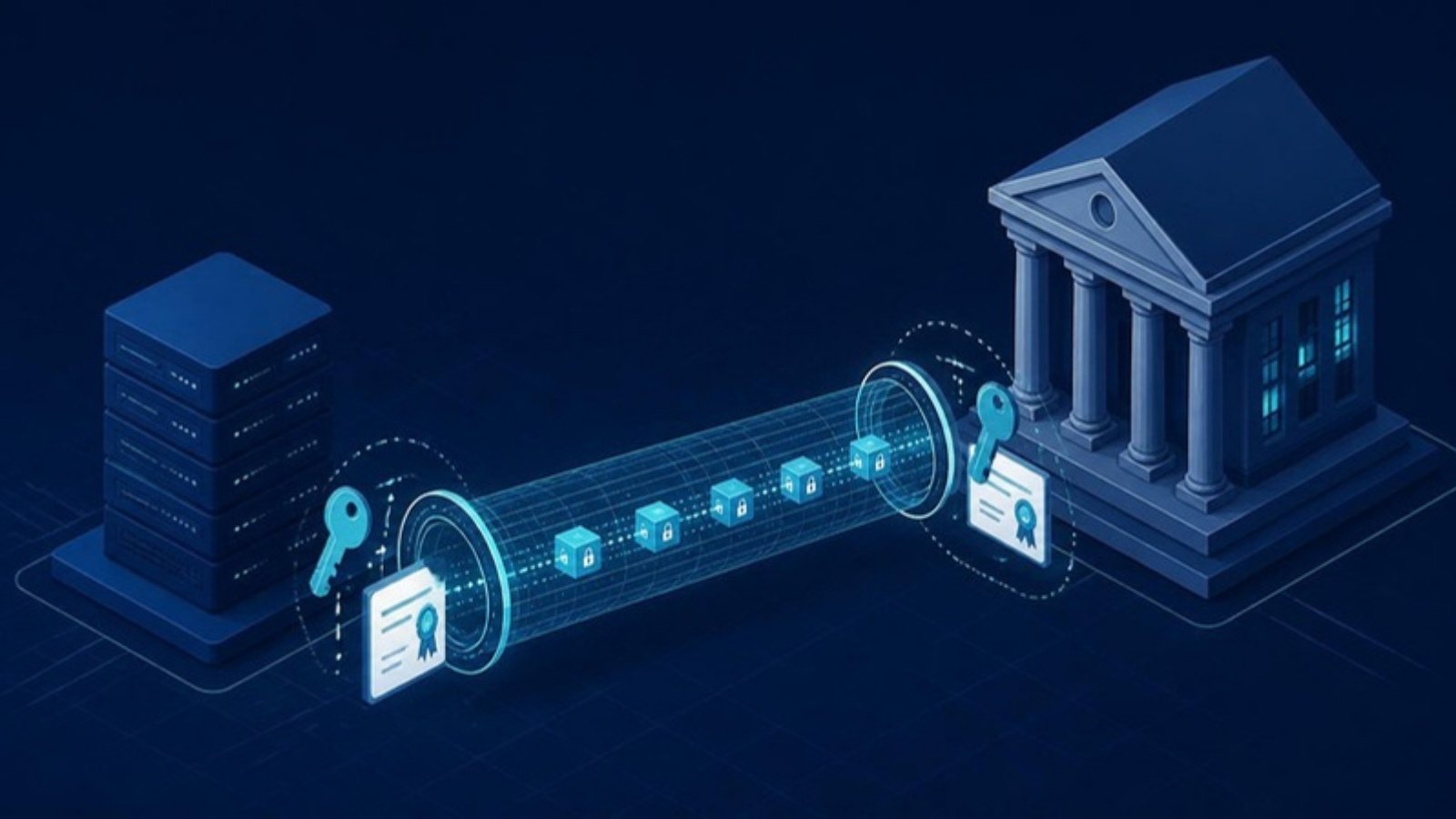
EBICS (Electronic Banking Internet Communication Standard) is a standardized protocol through which companies send payment orders to their bank and retrieve account statements. This article explains what EBICS is, how its security works and what finance teams should consider when adopting it.
What EBICS is used for
EBICS replaces manual uploads in bank portals with a direct, automatable connection between business software and the bank. It carries ISO 20022 files such as pain.001 and pain.008 and, in the other direction, camt statements. It is especially common in Germany, France and Switzerland.
How security is built
Each subscriber holds its own cryptographic keys, which separate three functions:
- Signature of orders, proving who authorized them;
- Encryption of the data;
- Authentication of the communication.
Depending on the bank and the version, keys or certificates are used. Transport runs over the internet in a secured channel.
Subscriber initialization
Before the first exchange, the subscriber generates its keys and sends them to the bank. The bank checks their fingerprints against a signed initialization letter and then activates access. This step can take a few days depending on the institution and should be planned in the project timeline.
Multiple signatures: VEU
For payments needing four-eyes control, EBICS offers distributed electronic signature (VEU): an order is signed in turn by several authorized people before the bank executes it. Details in our article on VEU electronic signature.
Versions
EBICS 2.5 is widely deployed; EBICS 3.0 introduces new order types and certificate management. The differences are covered in EBICS 2.5 vs 3.0.
Use cases
- SMEs: regular payment runs without portal work.
- Mid-market and groups: a uniform connection to several banks where they offer EBICS.
- Accounting firms: separate subscriber access per client and clear responsibilities.
Limits
EBICS requires the bank to offer it and the subscriber to be registered beforehand. Not every bank supports the same order types. Open Banking is an alternative.
EBICS with Arkaio
Arkaio is built on a native EBICS subscriber architecture and also supports Open Banking and SFTP. The flow from approval in Sage Intacct to bank reconciliation is described in connecting Sage Intacct to your bank.
Key takeaways
EBICS is a secure, proven channel for corporate payments. Its value lies in combining standardization, signature and automation.